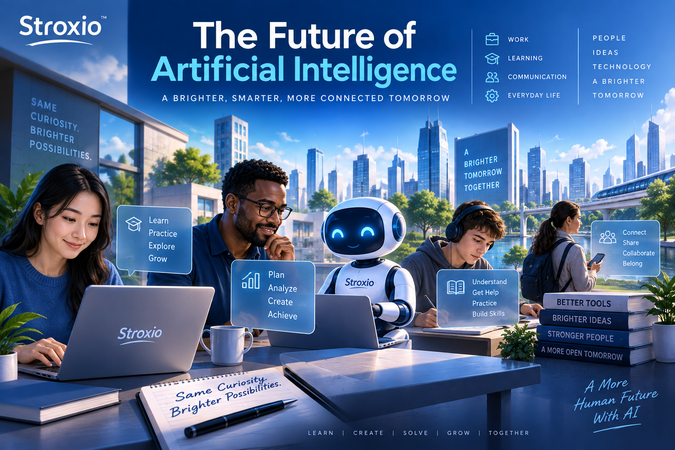
Artificial intelligence is developing quickly, and it is natural to wonder what comes next. Will AI become part of nearly everything we do? Will it change the way we work, learn, communicate, and solve problems? And how much of what we hear about the future of AI is realistic?
No one can predict the future of artificial intelligence with complete certainty. What we can do is look at how AI is developing today and identify the directions that appear most likely to shape the years ahead.
In this lesson, you’ll explore where AI may be heading, how it could become more integrated into everyday life, and why human judgment will remain important as these technologies continue to evolve.
AI Will Become More Integrated Into Everyday Life
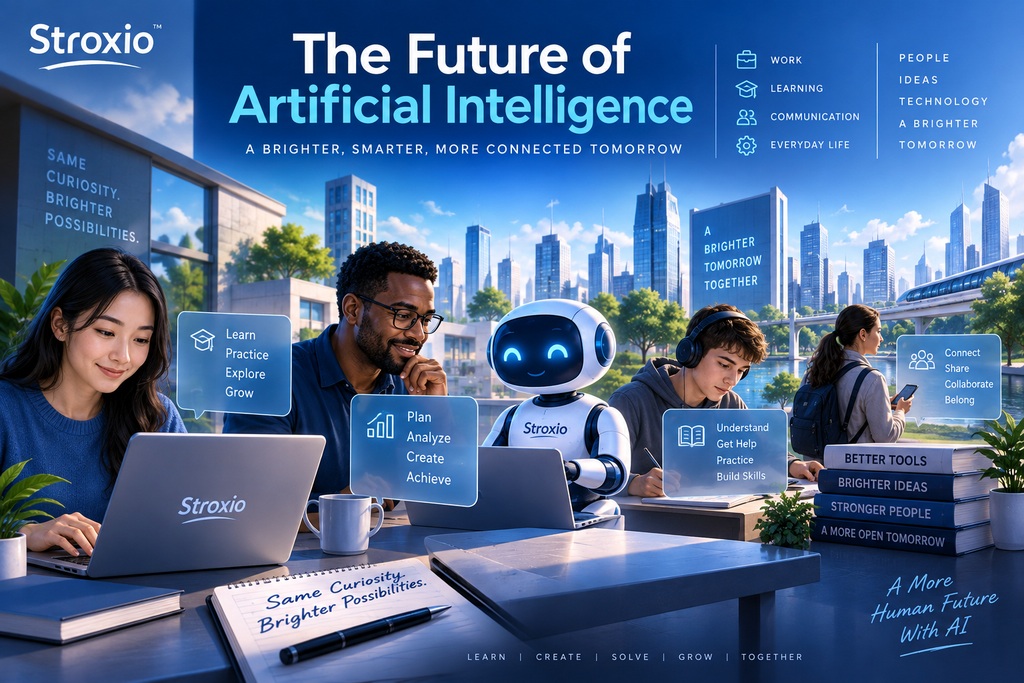
Artificial intelligence is already built into many tools people use every day, often without drawing much attention to itself. Search engines, navigation apps, streaming recommendations, smartphones, online shopping, and digital assistants all use forms of AI.
In the future, AI may become even more integrated into these everyday experiences. Instead of always opening a separate AI tool, people may find AI working quietly inside the software, devices, vehicles, workplaces, and services they already use.The biggest change may not be that AI suddenly appears everywhere. It may be that AI becomes so familiar that we simply begin to think of it as another useful part of everyday technology.
Stroxio’s Insight
The future of AI may feel less like a sudden technological revolution and more like a gradual change in the tools you already use. As AI becomes easier to access, knowing how to use it effectively may become an increasingly valuable everyday skill.
AI Will Change How People Work
One of the biggest questions about the future of artificial intelligence is how it will affect jobs. AI can already perform certain tasks that once required more human time, including summarizing documents, analyzing information, generating drafts, organizing data, and assisting with customer service.
As these systems improve, some tasks may become increasingly automated. At the same time, new responsibilities and types of work may develop around using, supervising, evaluating, and improving AI systems.
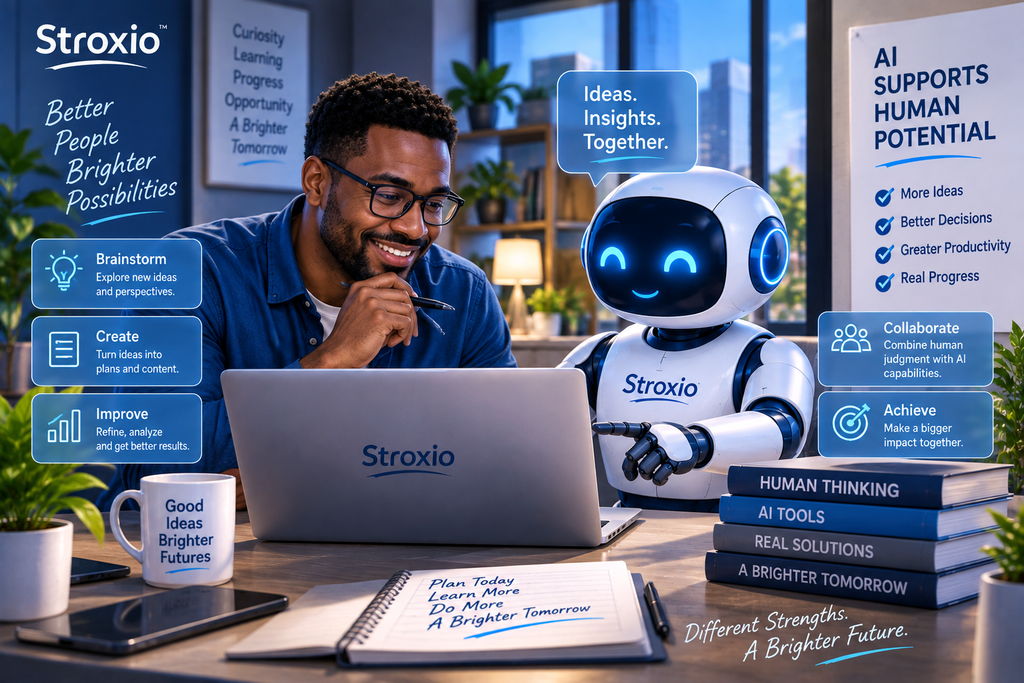
For many people, the change may be less about AI completely replacing their jobs and more about learning how to work alongside AI. Human skills such as judgment, communication, creativity, leadership, and understanding context can remain important even when AI handles part of the workload.
Stroxio’s Insight
The most useful question may not be, “Will AI replace my job?” but, “Which parts of my work could AI help me do better?” Learning to work with AI can help people adapt as technology changes.
AI Could Change How We Learn
Artificial intelligence is already giving people new ways to learn. An AI assistant can explain difficult ideas in simpler language, create practice questions, summarize information, provide examples, and help someone explore a subject at their own pace.
In the future, AI-powered learning tools may become more personalized. A student could receive explanations based on what they already understand, while an adult learning a new skill could use AI for step-by-step guidance and additional practice.
But easier access to answers does not eliminate the need to think. Learning still requires curiosity, practice, judgment, and the ability to question information. AI may become a powerful learning partner, but the learner must remain actively involved.
AI May Become More Capable and More Personal
Today’s AI systems can already work with more than just text. Some can understand images, generate audio, analyze documents, interpret spoken language, and work with video. As these capabilities improve, interacting with AI may become more natural and flexible.
AI assistants may also become better at understanding a user’s preferences, goals, and working style. Instead of responding to one isolated request at a time, future systems may be able to provide more consistent help across different tasks and situations.
Greater capability, however, also brings greater responsibility. As AI systems handle more information and become more personalized, questions about privacy, security, accuracy, and user control will become increasingly important.
Stroxio’s Insight
More capable AI does not automatically mean better decisions. As AI becomes more powerful and personalized, understanding when to trust it, when to question it, and when to rely on human judgment will become even more important.
Separate Realistic Possibilities From AI Hype
Predictions about artificial intelligence can range from realistic expectations to dramatic claims about what AI will soon be able to do. Headlines and social media can sometimes make experimental technology sound as though it is already widely available or guaranteed to happen.
A better approach is to separate what AI can do today from what researchers and companies hope it may be able to do in the future. A demonstration, prediction, or impressive prototype is not the same as a proven technology that works reliably in everyday situations.
When you hear a major claim about the future of AI, look for evidence. Ask whether the technology actually exists, whether independent sources have verified the claim, and whether important limitations are being left out of the discussion.
Human Judgment Will Still Matter
Even as artificial intelligence becomes more capable, people will still need to decide how and when these systems should be used. AI can process information, identify patterns, generate ideas, and suggest possible solutions, but those abilities do not remove the need for human judgment.
People bring experience, values, responsibility, empathy, and an understanding of real-world consequences to decisions. These qualities become especially important when technology is used in areas such as healthcare, education, finance, employment, and other situations that can significantly affect people’s lives.
The future of AI will therefore depend on more than what the technology can do. It will also depend on the choices people make about how to develop it, use it, question it, and set appropriate boundaries around it.
How to Prepare for an AI-Powered Future
You do not need to predict exactly where the future of artificial intelligence is heading to prepare for the changes ahead. A better approach is to develop skills and habits that remain useful as the technology changes.
Preparing for the future of artificial intelligence begins with understanding how AI tools work. Experiment with them, practice writing clear prompts, verify important information, protect your privacy, and pay attention to both their capabilities and limitations. The specific tools may change, but these habits will continue to be valuable.
Most importantly, stay curious. You do not have to become an AI expert to benefit from artificial intelligence. Understanding the fundamentals and being willing to keep learning can help you approach new AI tools with greater confidence.
For a research-based look at how artificial intelligence is developing, explore the Stanford AI Index Report, which tracks important trends in AI capabilities, adoption, research, and real-world impact.
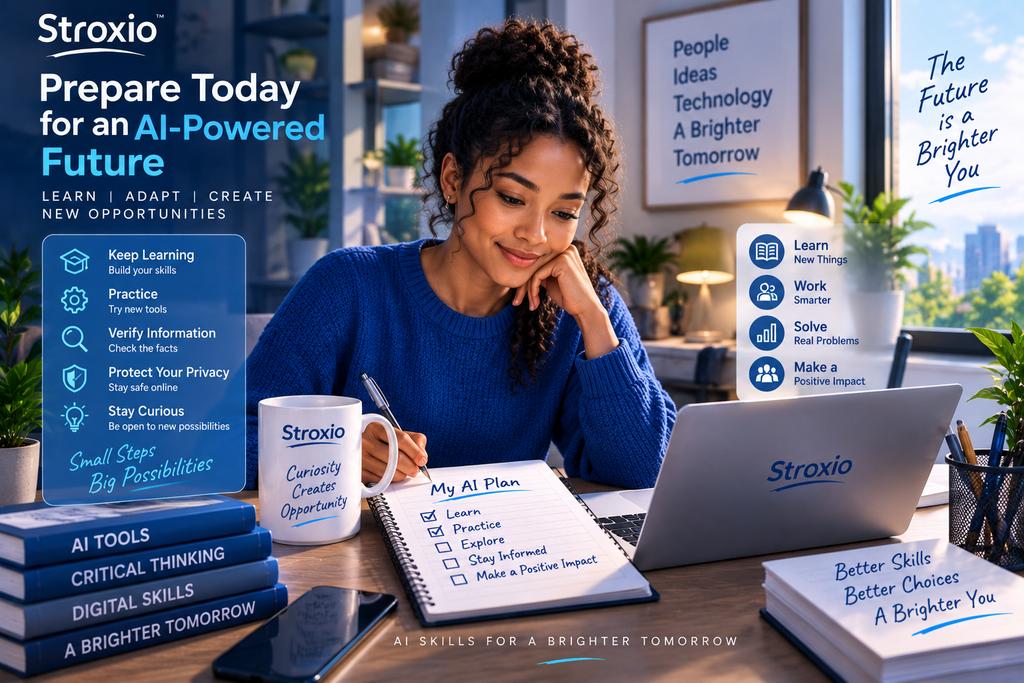
Stroxio Challenge
Take a few minutes to think about one area of your life where AI could become more useful to you in the future—work, learning, creativity, organization, research, or something else.
Choose one AI skill from this series that you want to continue practicing. It might be writing better prompts, verifying AI-generated information, protecting your privacy, choosing the right AI tool, or simply becoming more comfortable experimenting with AI.
Then set yourself one simple goal: use that skill intentionally during the coming week.
The future of AI will continue to change, but the best way to prepare for it is to keep learning one practical step at a time.
Key Takeaways
- AI will become more integrated: Artificial intelligence is likely to become a more familiar part of the tools and services people use every day.
- Work will continue to change: AI may automate some tasks while creating new ways for people and technology to work together.
- Learning may become more personalized: AI can provide explanations, practice, and assistance tailored to individual needs.
- More powerful AI requires responsibility: Privacy, security, accuracy, and appropriate human oversight will remain important.
- Separate progress from hype: Look for evidence before accepting dramatic predictions about what AI can or will do.
- Keep learning and adapting: Understanding AI fundamentals and maintaining good AI habits can help you navigate future changes with confidence.
Want to better understand the AI terminology shaping the future? Explore our beginner-friendly guide, AI Terms Every Beginner Should Know, for simple explanations of the concepts behind today’s AI technologies and tomorrow’s possibilities.
Lesson Complete
You now have a clearer picture of where artificial intelligence may be heading and how it could influence work, learning, technology, and everyday life. More importantly, you understand that the future of AI is not only about increasingly powerful technology—it is also about how people choose to use it.
You have now completed the Stroxio AI Foundations series. From understanding what AI is and how it works to learning how to use it responsibly and prepare for what comes next, you have built a foundation that can help you approach artificial intelligence with greater knowledge, confidence, and curiosity.
Your AI Journey Continues
Completing AI Foundations does not mean your learning ends here. In many ways, it is just the beginning.
You now have the knowledge to explore AI tools with greater confidence, ask better questions, recognize their limitations, and make more informed decisions about how you use them.
Keep experimenting. Keep questioning. Keep learning.
One lesson. One challenge. One step forward.